
Getting started
A safe first path for moving club operations into GoalDNA.
Quick answer
Start with structure before inviting the full club: workspace, teams, roster context, staff roles, then players and guardians.
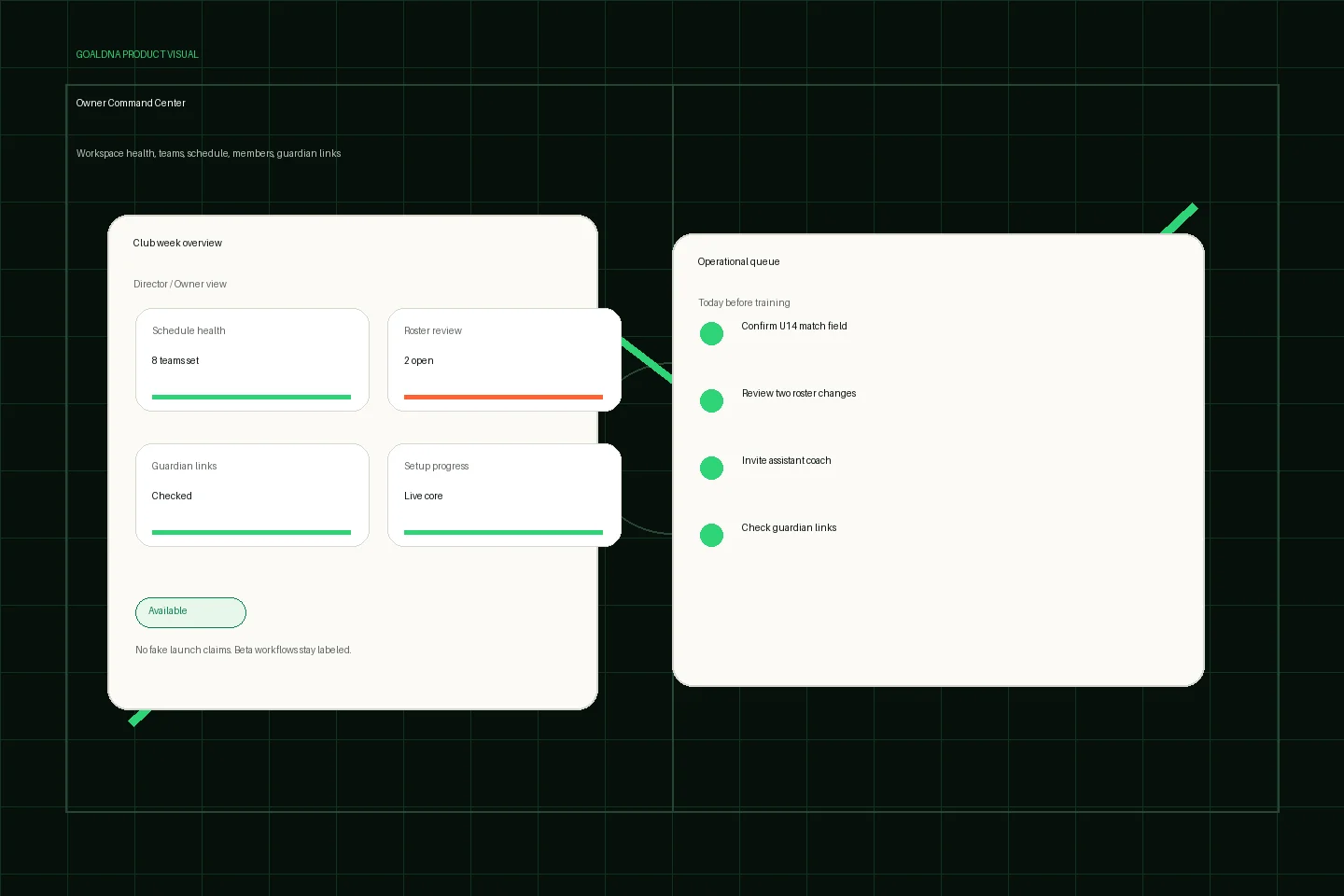
Public-safe product preview based on current GoalDNA workflows.
Product preview context
This public-safe product preview is based on current GoalDNA workflows and uses no private customer, player, guardian, inbox, injury, or member data.
- Status
- Available
- Product areas
- DashboardTeamsScheduleMembersGuardian links
Before you start
Name the real owner, the first team, and the role boundaries before inviting more people.
- Directors
- Admins
- Coaches leading setup
Step-by-step workflow
Work through the setup in the order a club would actually run it during the week.
- Create your account
- Confirm club workspace details
- Add your first teams
- Add players and staff
- Create a match or club event
- Invite guardians when visibility is ready
What good looks like
These are the available or practical outcomes to verify before moving on.
- Workspace setup
- Team creation
- Roster setup
- Staff invitations
- Schedule and match creation
Role visibility checks
Check access boundaries before inviting more staff, players, or guardians.
- Directors/admins should own setup.
- Coaches can validate roster and match context.
- Guardians should join after linked-player visibility is configured.
Common mistakes
Avoid these rollout errors; they create confusion faster than the product can clean it up.
- Inviting guardians before player links are clean.
- Treating beta availability workflows as finished policy.
- Skipping role review before adding coaches and staff.
Troubleshooting
Check the concrete schedule, team, roster, and role context before changing permissions.
- If members cannot find the right context, confirm they were added to the correct workspace and role.
- If guardians see too little, check player records and linked-player setup before sending broad invites.
- If setup feels too large, narrow the pilot to one team, one schedule, and one matchday workflow.
What not to rely on yet
These limits should stay out of club-critical plans unless feature status changes.
- Deep self-serve account management is partial.
- Pilot clubs should start with one workflow before broad rollout.
Beta / partial notes
Use these areas carefully with pilot expectations and transparent communication.
- Deep account self-serve is partial.
- Pilot clubs should phase rollout team by team instead of inviting every member on day one.
Example club scenario
A growing club starts with one U14 team, confirms the roster, creates the first match and training session, then invites guardians after linked-player visibility is checked.
FAQ
Should we invite the whole club immediately?
No. Start with owners/admins, one or two teams, and one workflow. Expand once roster, schedule, and role visibility are clean.
What is the safest first workflow?
Most clubs should start with teams, rosters, a match, and schedule communication before moving into beta availability or broader academy operations.
Related workflows
Available
Create your workspace
Set up the club workspace that will own schedules, people, and matchday context.
Read Create your workspaceAvailable
Invite your team
Bring people into GoalDNA with scoped roles instead of shared access.
Read Invite your teamAvailable
Teams & rosters
Use teams and rosters as the backbone for schedule, matchday, and communication workflows.
Read Teams & rosters